Financial health now
How the term felt
The average quarterly health score: jobs, pay after inflation, prices, borrowing, household cushion, federal finances, and a small stock-market contribution.
America's Vitals presents
One score for the financial life Americans experienced. A second for the future being built underneath it. The ranking balances both—because a sugar high is not the same as lasting health.
Financial health now
The average quarterly health score: jobs, pay after inflation, prices, borrowing, household cushion, federal finances, and a small stock-market contribution.
Future financial health
A four-quarter handoff reading: productive investment, productivity, workforce participation, inflation pressure, financial buffers, and federal room for the next shock. Stocks are excluded.
These can build quietly while today still looks good. The future score is designed to make that trade visible.
Score every quarter with the same current-health model.
Average the final four future-health readings to reduce noise.
Blend 65% lived health with 35% future health.
Assign responsibility only where evidence supports it.
The balanced podium
Current and partial terms are ranked, but clearly marked.
The full board
Each file separates score drivers from causal responsibility.
 Pre-COVID Pace SetterDonald TrumpFirst term · 2017–2021 · Full 16 quarters70.7now62.9future68.0balancedOpen the file
A mature expansion produced excellent lived conditions before COVID delivered the board’s sharpest sudden shock.
The term began with low unemployment, low inflation, cheap borrowing, and a health score above 70.
Federal Reserve research found the 2018–19 tariffs increased producer prices and weighed on highly exposed manufacturers.
The February–April 2020 recession was historically abrupt. The health model’s guardrail keeps temporary savings and markets from hiding the labor shock.
 The Long ExpansionBill Clinton1993–2001 · Full 32 quarters60.7now66.8future62.8balancedOpen the file
A ten-year expansion, stronger labor conditions, and improving federal finances produced a strong era, with a market reversal appearing near the handoff.
The 1990–91 recession ended nearly two years before the term began, though the labor recovery initially remained soft.
Deficit reduction reflected presidential and congressional choices, earlier budget controls, and a strong economy. The model credits the result, not one author.
The 1997–98 crisis hurt global growth, but cheaper imports and lower bond yields partly offset its direct U.S. trade effects.
Business activity peaked in March 2001. The late-term market decline appears before the recession that began just after the handoff.
 Comeback PlayerBarack Obama2009–2017 · Full 32 quarters59.4now64.3future61.1balancedOpen the file
The weakest inheritance on the board became a much stronger handoff, although the recovery took years.
The economy did not reach its recession trough until June 2009, several months after the term began.
Fiscal support came from the White House and Congress; financial rescue began earlier; monetary support came from the Fed.
The Fed held rates near zero and purchased longer-term securities to support jobs and credit.
 Still in QualifyingDonald TrumpSecond term · 2025–present · 7 quarters · provisional61.0now61.3future61.1balancedOpen the file
Productivity and investment keep the early future-health reading near today’s score; expensive borrowing, thin savings, inflation pressure, and limited federal room are the counterweight.
The term began with mortgage rates above 6%, a weak saving rate, and federal interest costs already consuming more revenue.
Federal Reserve researchers found that 2025 tariffs reached retail prices over time, with consumers absorbing part of the increase.
Deficit-financed policy can support near-term demand while higher debt raises future interest costs and can crowd out private investment.
The Fed controls its policy rate independently; Treasury yields, inflation expectations, and mortgage-market pricing do the rest.
 Inflation RollercoasterJoe Biden2021–2025 · Full 16 quarters58.6now59.8future59.0balancedOpen the file
A cash-rich reopening start gave way to the board’s worst inflation pressure, then a partial late recovery.
Large savings buffers, shortages, labor churn, and rapid demand recovery made the opening score look stronger than daily life felt.
Russia’s invasion of Ukraine compounded pandemic supply problems and global commodity inflation.
Rate increases helped cool inflation, but also flowed through to mortgages and long-term borrowing costs.
 The Crisis CliffGeorge W. Bush2001–2009 · Full 32 quarters57.3now56.7future57.1balancedOpen the file
The term began around the dot-com recession, recovered, then ended inside a housing-led financial collapse.
The expansion peaked in March 2001, making the opening downturn partly inherited and partly coincident with the new term.
Homebuilding peaked before the Great Recession while mortgage losses spread through financial markets during 2007.
The Great Recession began in December 2007 and became the deepest postwar downturn to that point.
Rate cuts and extraordinary liquidity programs were Federal Reserve decisions, not White House rate settings.
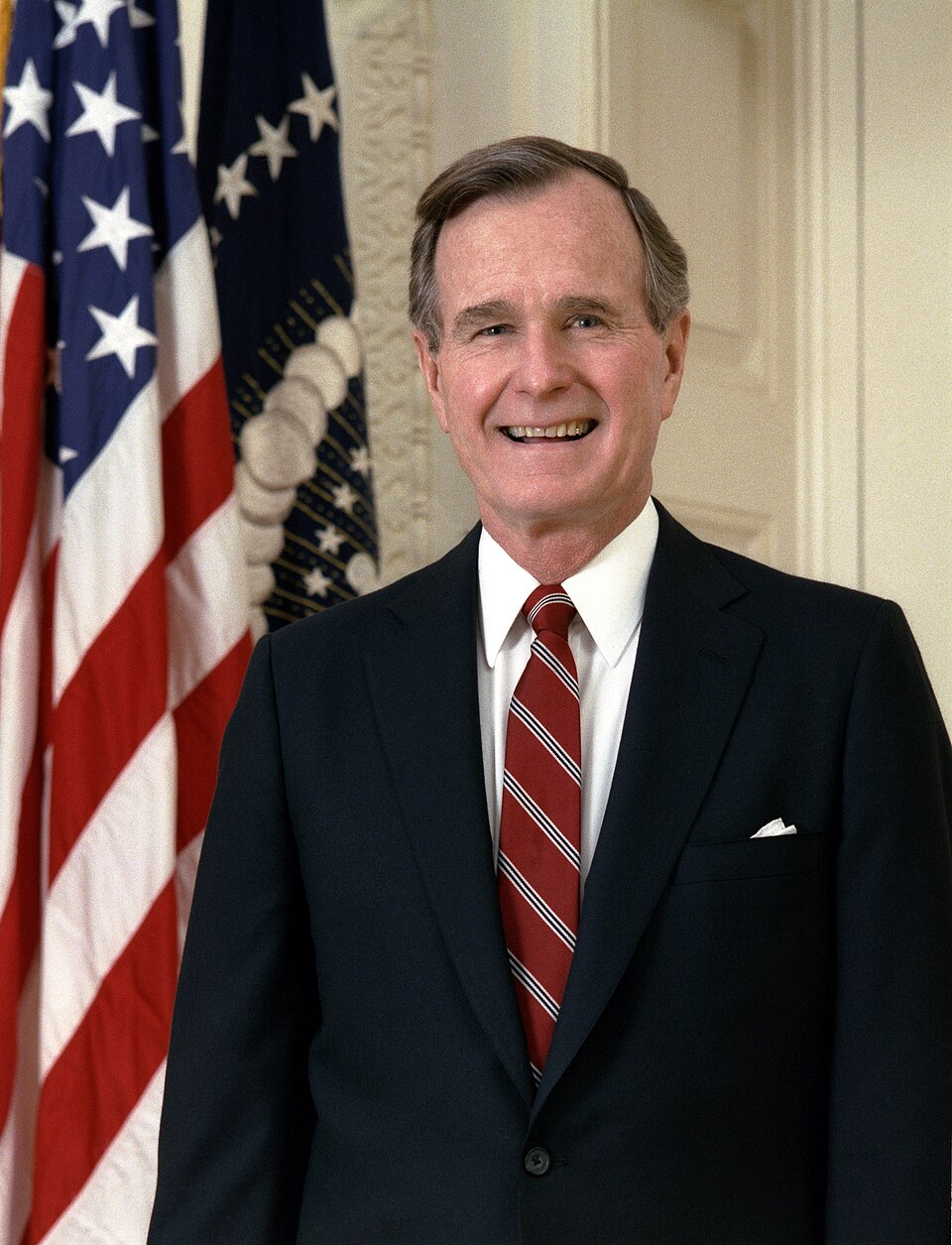 The Early-Data EntryGeorge H. W. Bush1991–1993 data window · Final 8 quarters only44.3now58.2future49.2balancedOpen the file
The comparable history opens at the end of a recession, then records a slow and uneven recovery.
The July 1990–March 1991 recession was already underway when this comparable dataset begins.
The 1990 budget agreement paired taxes and spending limits. The immediate politics were painful; the fiscal benefit arrived over several years.
Interest-rate decisions belonged to the independent Federal Reserve, not the White House.
Joe Biden · Q1 2021
Barack Obama · opening to handoff
Bill Clinton · final four quarters
The current-health guardrail engaged
Responsibility, without pretending
A Shapley-style contribution model changes one input at a time across many possible orders. It can say how much jobs, prices, borrowing, household buffers, federal finances, and stocks moved the score.
That requires credible research, institutional authority, and the right lag. The ledger separates the White House, Congress, the Fed, inherited conditions, market cycles, and outside shocks—with confidence shown.
The site will not label every good number a presidential win or every bad number a presidential loss. Unobserved future costs can appear as an emerging risk, but cannot become secret points.
Read this before starting a group chat war
The balanced ranking is 65% the average financial conditions during the term and 35% the final four-quarter future-health reading. The longer-horizon layer deliberately excludes stocks and watches capacity to grow, federal room, household and credit buffers, inflation pressure, and the workforce foundation.
History begins in 1991 because that is the earliest quarter with enough comparable inputs for a responsible score. Older readings carry lower confidence where a modern series did not yet exist.
See the full quarterly timeline